What is a root canal treatment?
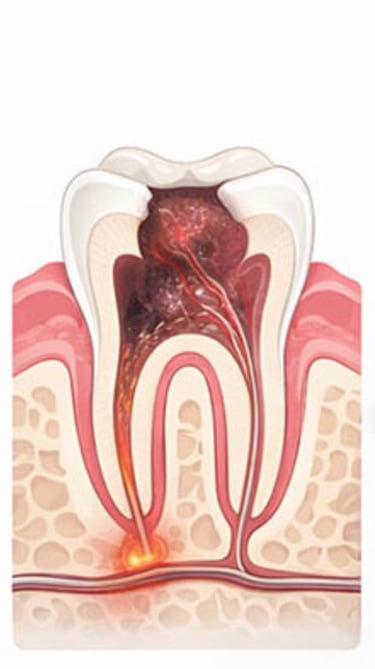
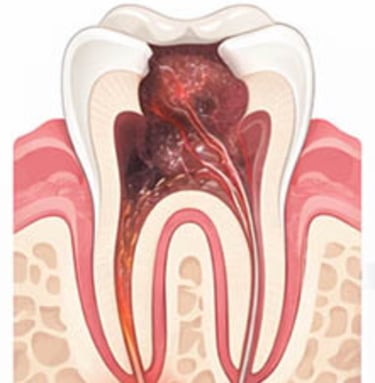
You may need a root canal if bacteria manage to breach the protective outer layers of your tooth (enamel and dentin) and invade the pulp. This typically happens due to deep tooth decay, repeated dental procedures on the same tooth, a crack or chip, or an injury to the jaw
Who needs a root canal treatment?
Every tooth contains a hollow space in its center containing the pulp—a network of nerves, blood vessels, and connective tissue that helps the tooth grow during development.
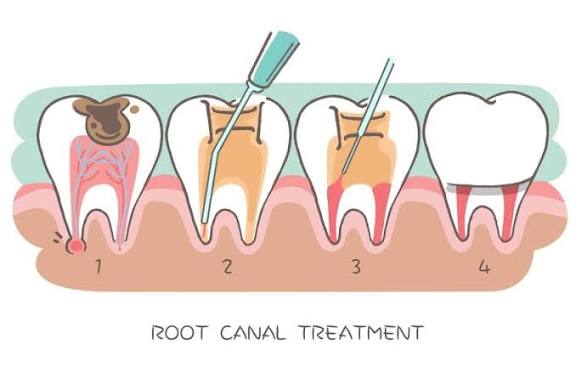
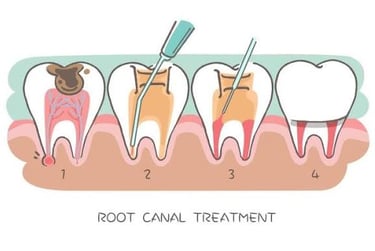
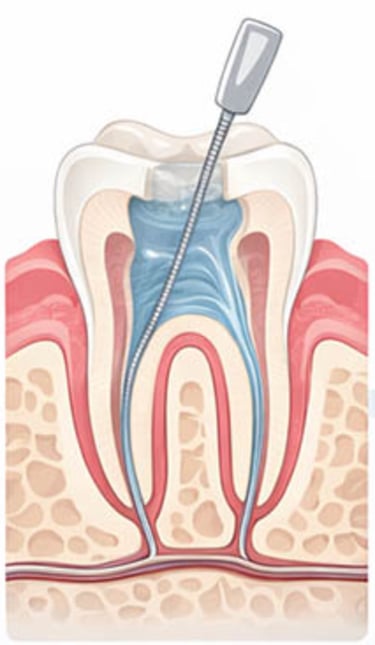
A root canal treatment involves gently removing this damaged or infected pulp from inside the tooth. Once the tissue is removed, the internal canals are thoroughly cleaned, disinfected, and shaped. The space is then filled and sealed with a biocompatible material to prevent future bacteria from entering. Because an adult tooth relies on the surrounding gums and bone for nourishment, it can function perfectly well without the internal pulp.
For molar teeth, we often continue with a Crown to protect the tooth from fracture after the root canal procedure is complete.
Common Signs You Might Need a Root Canal:
Persistent Pain: Severe, unprovoked toothaches or deep throbbing pain, especially when biting down or applying pressure.
Temperature Sensitivity: Lingering pain or a sharp ache after eating or drinking something hot or cold.
Gum Changes: Swelling, tenderness, or a small, pimple-like bump (abscess) on the gums near the painful tooth.
Tooth Discoloration: A dark, grayish tint on a single tooth, indicating internal nerve damage.
What can I expect during a root canal treatment?
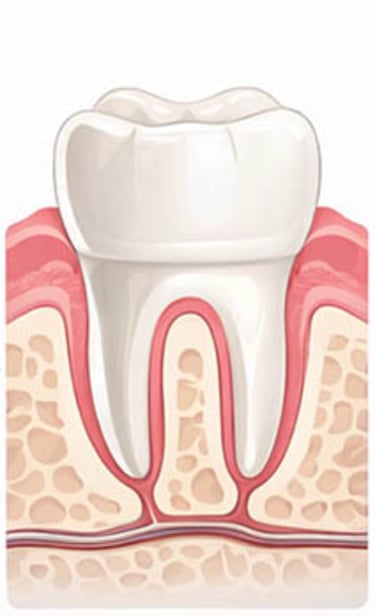
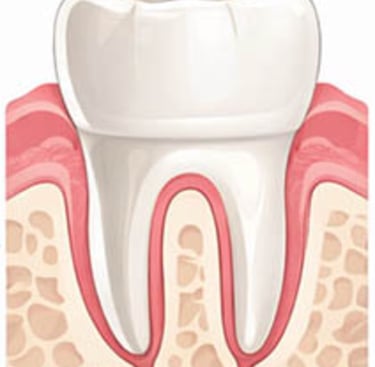
Diagnosis and Preparation
We take digital X-rays to assess the tooth and check for signs of infection in the surrounding bone. Next, we apply a local anesthetic to completely numb the tooth and the surrounding area so you won't feel pain during the procedure.
Removing the Infected Tissue
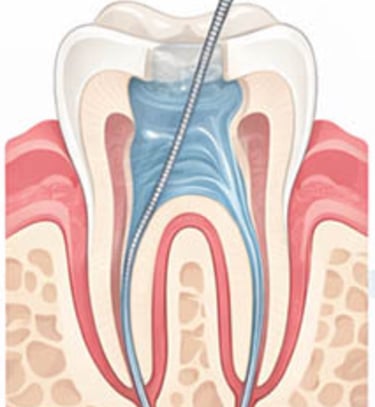
A small access opening is made in the crown of the tooth. Using specialized, micro-instruments, the dentist carefully removes the diseased pulp, cleans the canals, and shapes them to prepare for the filling.
Sealing the Canals
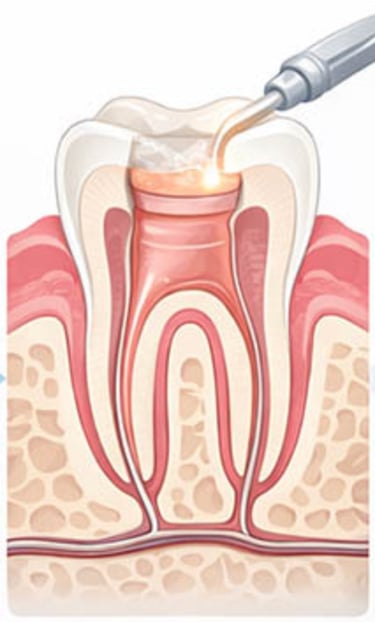
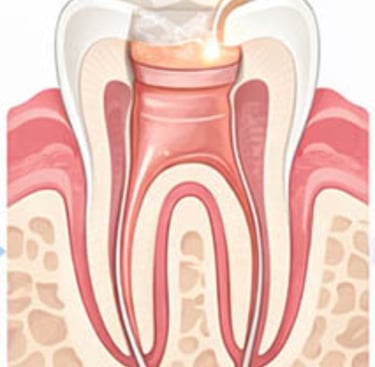
Once thoroughly disinfected, the canals are filled with a rubber-like material called gutta-percha and sealed with an adhesive cement. A temporary filling is placed over the access opening to protect the tooth until your next visit.
Final Restoration
Because a tooth becomes more fragile after its pulp is removed, a permanent restoration—typically a custom dental crown—is required. This restores the tooth's full strength, functionality, and natural appearance.